🧫 Reconstitution Guide
Prepare Your Environment
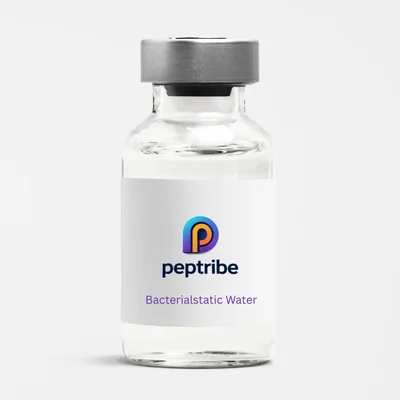
Wash hands thoroughly and put on sterile gloves and goggles. Ensure your workspace is clean. You will need: lyophilized peptide vial, sterile syringe, bacteriostatic water, and alcohol swabs.
Bring to Room Temperature
Allow both the peptide powder and bacteriostatic water to reach room temperature before reconstituting. Cold solutions can interfere with the reconstitution process.
Clean the Vial Tops
Remove the center of the metal cap from the peptide vial. Disinfect the rubber stopper with an alcohol swab. Repeat for the bacteriostatic water vial.
Add the Bacteriostatic Water
Using a sterile syringe, carefully withdraw the required amount of bacteriostatic water. Tilt the peptide vial at a 45° angle and slowly inject the water down the interior wall — not directly onto the powder. This minimizes bubbles and ensures even dissolution.
Gently Mix — Never Shake
Gently roll the vial between your palms until the powder is fully dissolved. Never shake vigorously — this can degrade the peptide structure and reduce potency.
Storage
Store reconstituted peptide solution at +4°C (refrigerator) for short-term use — stable for approximately 3+ weeks. For long-term storage, freeze at -20°C or below in aliquots. Avoid repeated freeze-thaw cycles as these compromise peptide integrity.